Showing posts with label Interview. Show all posts

April 26, 2009

SpaceTM talks to Timorous Beasties


Deconstructed Pisticule Lamp, 2009 
Timorous Beasties are one of the most original textile and wallpaper creatives in the UK today. Shortlisted for the Designer of the Year Awards in 2005 and one of Philip Treacy's favourite fabric designers, they recently caused a minor scandal on release of their new Edinburgh Toile, commissioned by the Edinburgh International Festival. (Don't you love a heated debate?)

Whilst launching lots of exciting new things in Milan Design Week, such as their new digi fabric and the 'Chester Chair', one half of them – Paul Simmons – managed to find time to answer some questions for SpaceTM in celebration of their forthcoming exhibition at the Millennium Gallery, Sheffield, inspired by the latter's John Ruskin collection.

What’s currently inspiring you?
Will Oldham also known as Bonnie Prince Billy and as The Palace Brothers.
Where is your favourite space?
Rossana Orlandi's Cafe in Milan
Country or city?
City.
Victoriana or 20th century modernism?
Modernism
Computer or pen & paper?
Pen and paper.
Tidy or messy?
Messy.
If you could, would you invite Ruskin round for dinner?
Of course, but I wouldn't have him stay for too long in case he bored everybody! 

Timorous Beasties Presents A Bird In The Hand is at Millennium Gallery from 9 May – 25 October 

Some more work from the exhibition to enjoy:

Papillion de Nuit Chair Panel, 2009
 
Papillion de Nuit Fabric, 2009 
 
Woodpecker and Bug Chair Panel, 2009
 
Zag-Wing, 2009  

April 21, 2009

SpaceTM's Joe Talks Interior Decor With Our Lady J


Performer Our Lady J first made her name as the pianist in Justin Bond's backing band. Now she's striking out on her own with emotional renditions of tracks by Nine Inch Nails, Alanis Morissette and Dolly Parton. With London joining New York in falling at her knees, SpaceTM thought now's a good time to make her acquaintance and find out if she's a more Bauhaus or baroque kinda gal...

Where do you live?
Harlem. And I LOVE IT!
Ok, do you prefer... Minimal or ornate?
Well, glimpsing at my vanity alone, I would have to say "ornate".
Tidy or cluttered?
Tidy. "Hot tranny mess" does not apply here!
Country or city?
City... for now.
What's the favourite thing you own?
My computer. From the Apple Store. I'm obsessed with technology and how we're integrating machines into an essential part of are beings. We talk to, listen to and have sex with our computers as much as (or even more than!) we do other human beings... And I think it's beautiful.
What's your favourite kind of interior decor?
Right now in my home I have a mishmash of pagan, romantic and futuristic decor. Rich earth tones are the backdrop to golden statuettes. Sacred objects and alters live in harmony with the household necessities of the modern age.
And finally... where's your favourite space?
I'm always happy when I'm sitting on a piano bench. There's no place I'd rather be than behind the keys.

Gospel For The Godless at Southbank Centre, London, May 2nd, www.ourladyj.com

March 14, 2009

SpaceTM meets designer Yu Jordy


Where's your favourite space?
The Tate Gallery of Modern Art in London.
How would you describe the interior of your own home?
White. Like a blank canvas. It's the start of creativitity.
What was the inspiration behind your new paper cut lampshade?
The Cloud Lamps were inspired by my architectural design projects. When I was doing my MA in Architecture at the Royal College of Art London, I used paper to make architectural models and exhibited at the Venice Biennale. The public loved my models and wanted to buy them, so I decided to transform the architectural models to a domestic product that people can buy and use to enhance the atmosphere of a home.


As an architectural designer, I think three-dimensionally; I don’t see the lampshade as an object but a space. My passion is to create sensational spaces for people. I am interested in how it feels for the 1:50 scaled people on the lampshade in the designed spaces, whether it is a church, playground, shopping mall, park or school; and how it feels like for us when the lamps are lit at home.
 
I don’t see lighting as an additional element to the architecture, but an integrated part of it, driving the relationship between the solid and void, adding life to the architecture.
 
As an architectural designer I wish to create better environments for other people, that’s not only by designing beautiful and sustainable buildings, but also exquisite sustainable product.

Pictured: paper-cut lampshade by Yu Jordy Fu

February 25, 2009

SpaceTM salutes Le Corbusier

Love him or loath him, you can't escape the influence of architect Le Corbusier (unless, that is, you live in an igloo). Throughout February and March the Barbican, London, is celebrating this mighty master of construction with an exhibition and a number of special events. SpaceTM took the opportunity to ask assistant curator on the exhibition, Corinna Gardiner, what the fuss is all about.

What do you love about Le Corbusier?
His ideas reshaped residential architecture from the private villa through to mass social housing. As an architect he saw his task as one of improvement for all.
Why is he still relevant today?
Take Le Corbusier's Villa Savoye (pictured below), built in the late 1920s – it still looks radically modern near 100 years later. The pared back mode of living he advocated continues to be considered elegant and desirable today.
So, what's your favourite Le Corbusier space?
The Chapel of Notre Dame du Haut at Ronchamp is an obvious favourite. At once monumental and intimate, this sacred building is hidden away amongst trees up on hill just outside the small town of Ronchamp. The winding approach and then the sudden revelation of the sculptural concrete form is unforgettable.

February 22, 2009

SpaceTM meets "Wallpaper Man" Colm O'Gallachor

Colm O'Gallachor, otherwise known as "Wallpaper Man", has over 25 years of experience installing and removing of wall coverings – from grass papers to wide vinyls – so it's perhaps no surprise Farrow & Ball regard him as a recommended paper hanger. SpaceTM reckons he must have seen quite a few interiors, so we took the opportunity to ask him about some of them.

What's the most complicated kind of wall covering you've put up?
The most complicated I have used was a gold leaf. It was more the angles in the room that was difficult.
What's the weirdest?
I think it has to be a graffiti mural I put up in a child's bedroom.
Where is the most amazing space in which that you've worked?
A country home in Fiffe Scotland. I had so many rooms to work with and different wall coverings.
What's the biggest trend in wallpapers at the moment?
I find that I am doing more and more feature walls with Farrow & Ball and Designers Guild papers.
Finally, where is your favourite space?
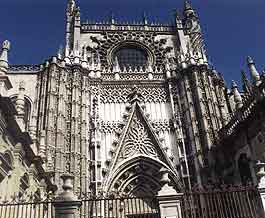
It is a church in Seville Spain called Iglesia de San Julian. It has the most amazing designs and features. It's something else! If you travel there its worth a visit.

Colm is available for hire and can be contacted on either colm01@blueyonder.co.uk or 07879484286

February 20, 2009

SpaceTM looks at photographer Joseph Eta

  
Yesterday SpaceTM featured Cameroon photographer Joseph Eta. We like his pictures so much we thought, "hell, why not show another one?!" So here it is – and if you're online, reading this in the middle of an urban jungle somewhere, then this image is especially dedicated to you. 

As Eta himself explains: “You develop a respect for nature when you grow up surrounded by it. I take photographs to help people who live in concrete worlds get a sense of what that respect feels like.”

You can buy prints of Eta's pictures here and he also has an exhibition at the Harbour Club, Chelsea, London, from February 27th.


February 18, 2009

Interview: Liberty's furniture & lighting buyer Michelle Alger

Half Blue Love Seat by Ercol

Liberty's, the famous London department store, is one of SpaceTM's favourite destinations. In particular we like nothing better than spend a Saturday afternoon having a nose round the huge variety of new and vintage furniture on the fourth floor. Here we get to meet the person who handpicks every piece that ultimately ends up in this hallowed space, Liberty’s furniture and lighting buyer, Michelle Alger.

First of all, where's your favourite space?
It has to be my garden in the summer. It backs onto a field full of cattle and horses. I am a plant junkie and spend ages planning the display (with a little help from my horticulturalist younger brother!). My other favourite space would be looking over Sennen Cove in Cornwall – sheer, rugged, natural, beautiful coastline.
Who's your favourite furniture designer?
Danny Lane. I love his use of glass and wood, and the way that he puts the natural elements together.
My favourite new designer is Zoe Murphy, for her quirky re-interpretation of Margate landmarks which she laser prints onto wood. Being a fellow Kent girl I really get her ideas and her re-use of vintage furniture; and, so it seems, do my customers, as we have sold out!
Ercol is making its debut on the fourth floor of the redesigned Liberty. What is it you love about Ercol?
The wood bending technique is something that fascinates me and the clean simple lines and shapes. Their designs still have longevity decades later.
Evergreen sofa by Ercol 
  
Black or white?
Neither, I am drawn to colour most of the time.
Old or new?
Old every time.
Minimalist or ornamentation?
Ornamentation. I like a treat for the eyes and not show homes. Features and character are what’s important to me. The excitement of what you might see round the next corner is the look that I have strived for on the fourth floor of Liberties.
Cluttered or tidy?
Have you not seen my desk? Cluttered!

January 22, 2009

Interview: Tenzing Rigdol

The way colour is used in our environment can have a lasting impact on our lives, as Tibetan artist Tenzing Rigdol explains.

“My childhood reminds me of my mother’s favorite colour – purple! She would have me and my younger brother all covered in purple clothes. Even the sweaters, gloves and mufflers that she arduously wove were all in purple. So the colour purple has become the colour of my childhood and I used it as the base for this painting [Mandala Of Kids, 2008, see below]. It is cold clean and innocent. I think that we all have similar traces of it.”
  

Mandala of Kids, 2008, Acrylic on canvas 136 x 134 cm (53_ x 52_ in) © Tenzing Rigdol

Five facts about Tenzing Rigdol
1. He was born in 1982 in Nepal.
2. In 2002 he and his parents were granted political asylum in the USA.
3. He is experienced in the traditional Tibetan arts of sand painting and butter sculpture.
4. He studied art and art history at the Univsersity of Colorado, USA.
5. Talking about his sculpture This Is Not A Chair he explained: “I wondered if I could change the functionality of a clearly defined object by adding other values to it. In this case, I covered the chair with Tibetan Buddhist scriptures and asked myself if this could still be a chair? Perhaps it is a chair which one cannot use to sit on, or maybe someone can sit on it while others cannot, depending on their own mental disposition.”

The Exhibition "Experiment with Forms: Tenzing Rigdol" is at Rossi & Rossi Ltd, London, from Feb 11th to March 27th 2009.

Ikea Polemic [003]


What do you think about Ikea? Does it provide you with life solutions, or interior nightmares?

Previously SpaceTM heard disgraced pop star Boy George's views on the Swedish furniture institution. Now Gavin & Stacey star, actor Mathew Horne (above), exclusively gives us his opinion:

"I love Ikea products. But hate Ikea. I think I've argued every single time I've been to Ikea! And how ever good those hotdogs are, they can't appease that argument."

Go on, tell us your views on Ikea. Let's have a heated debate!

Matthew Horne stars alongside Imelda Staunton in Joe Orton's Entertaining Mr Sloane at Trafalgar Studios 1, London, (0870 060 6632), from Jan 22nd until April 11th. He also stars in the movie Lesbian Vampire Killers, on release from March 20th.

December 26, 2008

Interview: SpaceTM's Joe meets Graham Rawle


One of the things we’re particularly interested in at SpaceTM is how environments shape our psyche. In fact, we often create them especially to manipulate this - whether they are the ones around us (such as our cosy living rooms), or the fantasy ones we enter when we engage with books, film or art.

Graham Rawle is a writer and collage artist whose visual work incorporates illustration, design, photography and installation. One of the reasons I like his stuff is because you can recognise it a mile off. It also has the ability to make you laugh, reflect, ponder and sometimes feel a little creeped out (in the best possible way) - and you can never have enough of that, really, can you?
 
Here is part one of my chat with Rawle in which he took some time out of his busy Christmas schedual to talk about his unique creations...
 

How would you describe the world of Graham Rawle to someone who didn't know your work?
My background is in visual art, but over the years writing has becoming an increasingly important part of what I do. I initiate projects that allow me to indulge myself in the kind of work I want to do and I generally have total control of the outcome (though that often means sacrificing the income). Everything tends to be deeply rooted in my childhood: my pictures and stories are generally set in the late 50s and early 60s. I live and work in the same place, which enables me to surround myself with all my stuff, so for me it’s perfect. There are a lot of books, magazines and toys, many of them related in some way to my past, which are often incorporated into my work. It’s like living in an old second-hand shop where everything in it has been chosen specially for me.
Is humour important to you?
It is, very. But there is a serious side to what I do, so I often have to resist the urge to go for the joke. It’s much more effective to keep that side under control and use it to counterpoint the darker side.
With regards to your own designs, when was the first time you thought, "I'm onto something here…”
I was a late developer. I didn’t ‘get it’ until I was nearly thirty. I was a graphic designer and an illustrator when I started doing what I called my ‘personal work’: pictures that illustrated incidents from my childhood, often concentrating on tiny memory fragments. It was very personal, and there were many pictures that I never showed to anybody. For the first time I was doing work that didn’t concern itself with an audience. It wasn’t for them; it was for me and I felt so much better about what I was doing. Ever since, the work I do and the stories I write are primarily to please myself. I’m not looking at the market or trying to appeal to a wider audience; that doesn’t interest me.
Your work features a lot of doll parts. What is it about them that attracts you?
I tend to go for dolls that are worn, broken, well loved, abused, or customized. I often swap body parts to get the characters I want. I suppose I always liked dolls as a child, though it wasn’t a sissy thing; I think I was more interested in undressing them than dressing them, and I was attracted to the pretty ones. I still am. I love the doll I used for the role of Dorothy in my version of The Wizard of Oz. She has such a lovely face. I’ve used her in several projects now and have a very special relationship with her. (And I think I’m making myself sound creepy and weird.)

Interview: SpaceTM's Joe meets Graham Rawle [002]

If we had a look round your home, do you think we could tell it was yours? 
Oh, I think so. An art collector once visited and said it was like walking into one of my pictures. I took that as a great compliment. Of course, my wife has all her stuff here as well, but she’s an artist too and we share a lot of the same interests so there’s a good degree of overlapping. Mine is much messier and possibly more arbitrary, while her collecting seems a little more discerning and refined (though she does have a collection of ‘things that have been flattened on the road’ and one of ‘bits of twisted wire’).
How would you describe your studio?
It’s a big open warehouse space in Shoreditch, bought in 1994 when property was cheap round these parts. It was just a shell, with nothing done to it. Apart from the basics, a kitchen space and bathroom, we haven’t done much else to it since we moved in. I think about it sometimes, but we’re always so busy and don’t seem to find the time. Work takes priority. It’s a working space that we live in, rather than a living space that we work in.
What's inspiring you the most at the moment?
I’m writing a novel at the moment and trying to work out the details of my plot. The second act is all over the place, but it takes a long time to get these things to work. It will go through many drafts before it’s done.
I think my writing is more influenced by cinema than anything else: the economy with which good stories are told. I watch certain films over and over again, analyzing the story structure to discover how this has been achieved. This affects the way I construct and edit my writing. It can be a little thing like starting scenes as late as possible and getting out of them as soon as their objective is reached, but overall I think it gives my stories a more cinematic feel, which seems appropriate to their content.

Graham Rawle's book The Wizard of Oz, a visual reinterpretation of L. Frank Baum's original text, is out now. His critically acclaimed Woman's World, a novel created entirely from fragments of found text, is being made into a feature film and his weekly Lost Consonants first appeared in the Weekend Guardian in 1990 and ran for 15 years. 

December 24, 2008

Ikea Polemic [002]


Earlier this year, Boy George gave his view on Ikea to SpaceTM's Joe:

"I'm not against a bit of Ikea and I have bought odd bits over the years. None of the stuff you have to put together yourself, just lamps and cushions or bathroom stuff. Ikea is not really suited to my Gothic Pile but I think it has its uses."
 
Tell us what your view is on Ikea...

December 9, 2008

Interview: Jean Charles de Castelbajac


Designer Jean Charles de Castelbajac talks exclusively to SpaceTM about the creative process and where his ideas come from.

From JCdC
"For me, creation is part of a precise process:
 
1. The Accident: when two images meet in my head for a second, creating a smash. [This suggests] an idea. After that the idea is [stored] in a special department in my head named "supra-reserve", ready to be used at any moment.
2. The Syncronicity: when I start to design, imperfections or mistakes [suggest] another way to see... then i just follow the road.
3. The Pollination: when I bring one universe unto an other – fashion to music, music to design – something super exciting starts to appear [and] I become a king bee pollinizing new flowers of creativity.
4. The Bauhaus Rules: I used to believe that every good design submits to its function! But today I often transgress that rule.
5. The no-limits of hijacking: every image belongs to me! I invented co-branding in fashion 40 years ago when I signed my jeans "Jesus". Today the world belongs to pirates of [all] kinds." Jc De Castelbajac

Four Facts About Jean Charles de Castelbajac
1. He was born on November 28th 1949 in Casablanca, Morocco.
2. He's the Marquis de Castelbajac, which makes him a French nobleman.
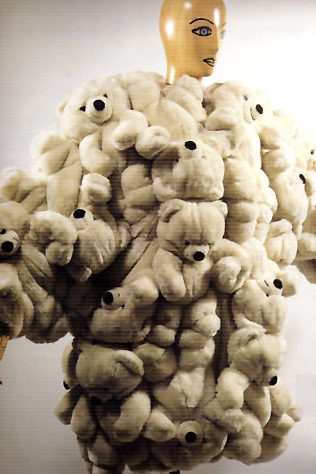
3. One of his most famous fashion creations is a coat of teddy bears worn by Madonna and supermodel Helena Christensen in the film Pret-á-Porter. He's also made liturgical robes for Pope John Paul II.
4. As well as fashion he also designs home furnishings.